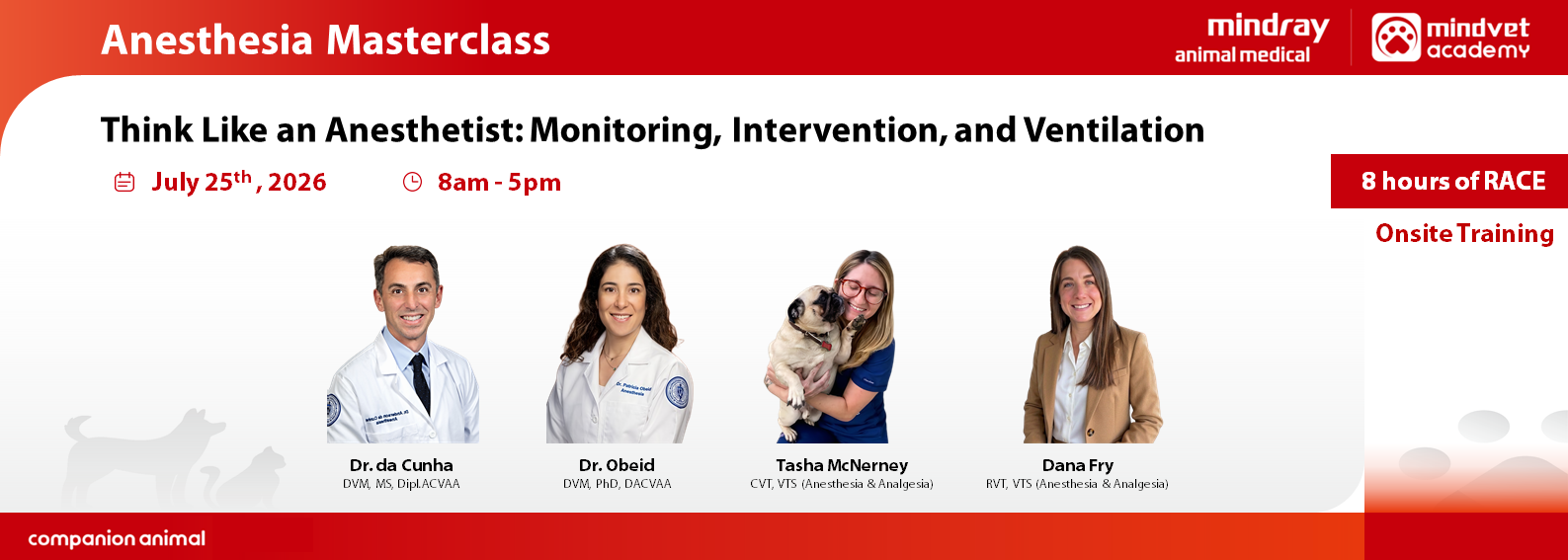
Think Like an Anesthetist: Monitoring, Intervention, and Ventilation
Veterinary anesthesia professionals are invited to a comprehensive continuing education event focused on improving patient safety and clinical outcomes in small animal practice. This program features expert-led lectures covering essential pre-anesthetic preparation, ECG monitoring and arrhythmia interpretation, management of intra-operative hypotension, and capnography and ventilation strategies. Attendees will gain practical, immediately applicable skills to enhance anesthetic planning, monitoring, and intervention in dogs and cats. The event also includes an interactive, hands-on workshop on mechanical ventilation, where participants will work through real-world cases in small groups to develop and apply ventilator strategies using modern anesthesia equipment. Designed for veterinary technicians, nurses, and veterinarians, this program combines foundational knowledge with advanced clinical techniques to build confidence and competence in anesthesia care.
What you'll learn this time
Apply comprehensive pre-anesthetic planning, including patient assessment, stabilization, sedation selection, and equipment preparation, to reduce anesthetic risk in dogs and cats.
Interpret ECG waveforms and identify common anesthetic-related arrhythmias, including selecting appropriate treatment strategies.
Develop a systematic approach to diagnosing and managing intra-operative hypotension using fluid therapy, drug selection, and anesthetic adjustments.
Utilize capnography and mechanical ventilation principles to assess respiratory function, select appropriate ventilator settings, and manage hypoventilation or hypoxia in anesthetized patients.
Meet the speakers

Dr. da Cunha
DVM, MS, Dipl.ACVAA - Veterinary anesthesiologist specializing in anesthesia and pain management. - Diplomate of the American College of Veterinary Anesthesia and Analgesia since 2009.

Dr. Obeid
DVM, PhD, DACVAA - Veterinary anesthesiologist focused on anesthesia, pain management, and veterinary education. - PhD., anesthesia residency trained, and Diplomate of the American College of Veterinary Anesthesia and Analgesia (2025)
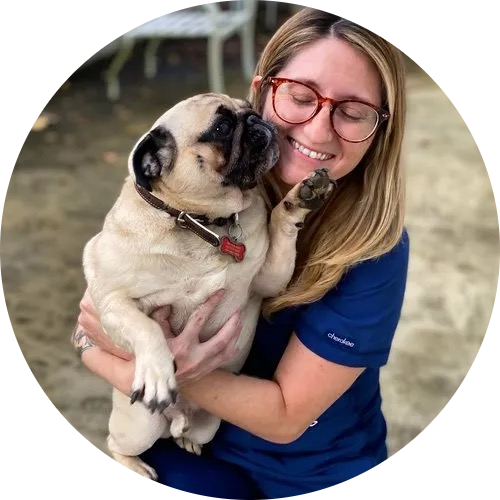
Tasha McNerney
CVT, VTS (Anesthesia & Analgesia) - Certified Veterinary Technician (CVT) and Veterinary Technician Specialist (VTS, Anesthesia & Analgesia, 2015) focused on veterinary anesthesia and pain management education. - Founder of Veterinary Anesthesia Nerds; VMX 2020 Veterinary Technician Speaker of the Year; host of Veterinary Anesthesia Nerds Podcast

Dana Fry
RVT, VTS (Anesthesia & Analgesia) - Registered Veterinary Technician (RVT) with B.S. in Animal Science from The Ohio State University; licensed since 2016 - Veterinary Technician Specialist with 10+ years’ anesthesia experience
Training Agenda
7:30 am - 8:00 am Breakfast Reception 8:00 am - 8:50 am Course One: Ready, Set, Anesthetize: Essential Steps Before Induction Course Instructor: Dr. da Cunha Successful anesthetic outcomes begin long before induction. This lecture reviews the critical steps that should occur during patient preparation, including medical record review, pre-anesthetic assessment, patient stabilization, sedation planning, equipment and drug preparation, checklist utilization, and induction planning for dogs and cats. Participants will learn how thorough preparation can reduce anesthetic complications, improve patient safety, and contribute to lower anesthesia-related morbidity and mortality. The course will also highlight common deficiencies observed in general veterinary practice and provide practical strategies that can be immediately implemented in clinical settings. 9:00 am - 9:50 am Course Two: Anesthetic Monitoring and ECG Interpretation: Basics to Common Arrhythmias Course Instructor: Dana Fry This one-hour lecture will discuss the importance of ECG monitoring for anesthetized patients and cover the basics of the cardiac electrical pathway and how it relates to the parts of an ECG waveform. We will also go through how to evaluate an ECG and discuss normal waveforms as well as abnormal waveforms. In addition, we will discuss common arrhythmias encountered under anesthesia and treatment options for those arrhythmias. 10:00 am - 10:50 am Course Three: Managing Intra-op Hypotension Course Instructor: Tasha McNerney This lecture will review the physiology of blood pressure regulation during anesthesia, common causes of hypotension in veterinary patients, and practical treatment strategies used in clinical practice. Participants will learn how anesthetic drugs, patient factors, cardiovascular dysfunction, and ventilation can contribute to hypotension, as well as how to develop a logical, stepwise approach to diagnosis and intervention. Topics will include fluid therapy, anesthetic depth assessment, vasoactive medications, inotropes, anticholinergics, and monitoring techniques. This course is designed for veterinary technicians, veterinary nurses, and veterinarians seeking to improve patient safety and anesthetic outcomes through effective blood pressure management. 11:00 am - 11:50 am Course Four: Capnography and Ventilation: Discussing Physiology and Management Techniques Course Instructor: Dr. Obeid This course covers the respiratory physiology components: oxygenation and ventilation. In addition, the function and different modes of mechanical ventilators are also explained. With this lecture, you will be able to identify the common causes of hypoxia, briefly interpret the most common capnograph changes, and decide which ventilation mode to choose, depending on patient condition. 12:00 pm - 1: 00 pm Lunch Break and Networking 1:00 pm - 5:00 pm Mechanical Ventilation in Veterinary Anesthesia Workshop Workshop Instructors: Tasha McNerney and Dana Fry Mechanical ventilation is a critical component of modern veterinary anesthesia, yet many anesthesia providers lack confidence in selecting appropriate ventilator settings and troubleshooting respiratory complications. This interactive, case-based wet lab is designed to provide participants with practical experience applying mechanical ventilation principles to a variety of canine and feline anesthetic patients. Working in small groups, participants will evaluate patient signalments, anesthetic considerations, and physiologic parameters to develop individualized ventilator strategies using both volume-driven and advanced anesthesia ventilators. Workshop Agenda: • First 30 Minutes: An explanation of when to utilize mechanical ventilation and the different modes available. • Remaining 3.5 Hours: Hands-on rotations between four stations. Each station will feature a different case presentation. Participants will work in groups of six to discuss and implement ventilation strategies.
Ready to Elevate Your Anesthesia Skills?
This is your opportunity to learn from leading anesthesia experts, gain hands-on experience with modern equipment, and take home practical strategies you can use in your next surgery. With only 24 spots open, this is your moment — don’t miss out, secure your spot now!
$300.00
Cancellation & Refund Policy
All refund requests will be reviewed and responded to within 14 business days upon receipt of complete information. 1. Refund Eligibility Full refund: Requests made more than 30 days before the course start date. 50% refund: Requests made 14 to 30 days before the course start date. No refund: Requests made less than 14 days before the course start date or after the course has started. All refunds are subject to deduction of applicable administrative fees. 2. Refund Request Procedure To request a refund, please email: [email protected] Include the following information: Register Full name, Registered email address, Course name, Order number, screenshot of Payment proof.